
When it’s summertime and hot, frozen desserts like ice cream or gelato can be just a few moments away when you have your own non-toxic ice cream maker. But which ice cream makers have the safest food contact materials? This is not easily answered. Mamavation reached out to the most popular ice cream makers to understand what materials they are made with. You’ve trusted Mamavation to bring you topics like safest cookware, safest cutting boards, safest water purifiers to filter PFAS, & safest cooking oils tested for toxic phthalates, now join us for our latest small kitchen appliance investigation on Ice Cream Makers.
Disclosure: This post was medically reviewed by Sondra Strand, RN, BSN, PHN. This post also contains affiliate links. Please make sure to do your own research as brands and materials may change at any time without notice. California’s laws on cookware and small kitchen appliances are forcing brands to disclose toxic chemicals as of January 1st, 2023, however, not all brands are in compliance with this new law yet. As they comply, these ranks may change if they disclose something they have not disclosed before. Mamavation does its best to get information as accurate as possible, but there are many variables we have no control over such as brands changing products, customer service communicating inaccurate information, or having knowledge of materials not disclosed. We encourage you also to do your own homework and keep us updated on what you find. Products and manufacturing aides can change without notice so buyer beware. This post contains affiliate links, with most to Amazon, which means Mamavation will receive a portion of those sales and we will use that to pay ourselves back for the testing. You can also give a tax-deductible donation to our consumer studies here through Environmental Health Sciences. Thank you! Copyright © 2025 Mamavation — All Rights Reserved
Table of Contents
Most Ice Cream Makers Have Toxic Food Contact Surfaces
It’s tough to find a non-toxic ice cream maker. The ice cream maker industry was not a great one overall in terms of food contact materials and surfaces. Most machines use plastic and/or aluminum on food contact surfaces, or are very expensive, while using all stainless steel. The only “in-between” models that are safe and affordable are the new “rolled ice cream” machines because they only have a cold stainless steel surface.
So please note this before you scroll to the bottom. We are delivering some bad news about these units, but giving you the best information so you can make that decision. We have done our best to show you how they all rank against each other based on the food contact materials they are exposing you to. Here’s what we found when we reached out to them about the materials below.
PFAS “Forever Chemicals” called Xylan coating
A very popular brand has disclosed fluoropolymers referred to as “Xylan coating” on food contact surfaces. Xylan coating is made from a type of fluoropolymer similar to polytetrafluoroethylene (PTFE aka “teflon”). Non-stick coatings have become well known for their toxicity, and they’re bioaccumulative. Fluoropolymers used in non-stick coatings were found to increase the incidence of tumors of the liver, testicles, mammary glands, and pancreas in lab animals. The EPA has also categorized perfluorinated compounds (PFAS) as likely carcinogenic. Finally, a study by the Centers for Disease Control and Prevention (CDC) discovered a shocking statistic — 98% of Americans have detectable levels of PFAS or PFCs in their bodies.
Mamavation has studied PFAS contamination closely in cookware, food packaging, and water. These chemicals are linked with the following diseases and symptoms:
- metabolic diseases like obesity & diabetes
- reduced vaccination response
- affect the growth, learning, and behavior of infants and older children
- lower a woman’s chance of getting pregnant
- interfere with the body’s natural hormones
- increase cholesterol levels
- affect the immune system
- increase the risk of cancer
Aluminum Bowls / Buckets
Many years ago, most ice cream makers had aluminum bowls. This cut costs for the manufacturer and made the machine a lot lighter. (Ice cream makers with stainless steel tend to be heavier.) But as the years went by, aluminum has gone out of favor. And therefore you will see more ice cream bowls or buckets made from stainless steel. This is great because aluminum has some issues.
Aluminum is ubiquitous in cookware & small kitchen appliances meaning you’ll find it everywhere. The most important part to concentrate on is food contact surfaces and what your food touches when it’s being cooked.
Aluminum cookware likely leaches trace amounts of aluminum into food when it’s part of the food contact surface. Over time, trace amounts of aluminum in your diet can be problematic to your health. It is bioaccumulative and a known neurotoxin that can cause neurological disorders like dementia.
Some ice cream makers contain aluminum in the bucket or bowl. When brands were not transparent about where their aluminum was located, we slotted them in the “not our favorite” or “better” realm. You’ll not find aluminum food contact surfaces, plastic, or PFAS “forever chemicals” in the “best” realm below.
Plastic Paddles & Dashers
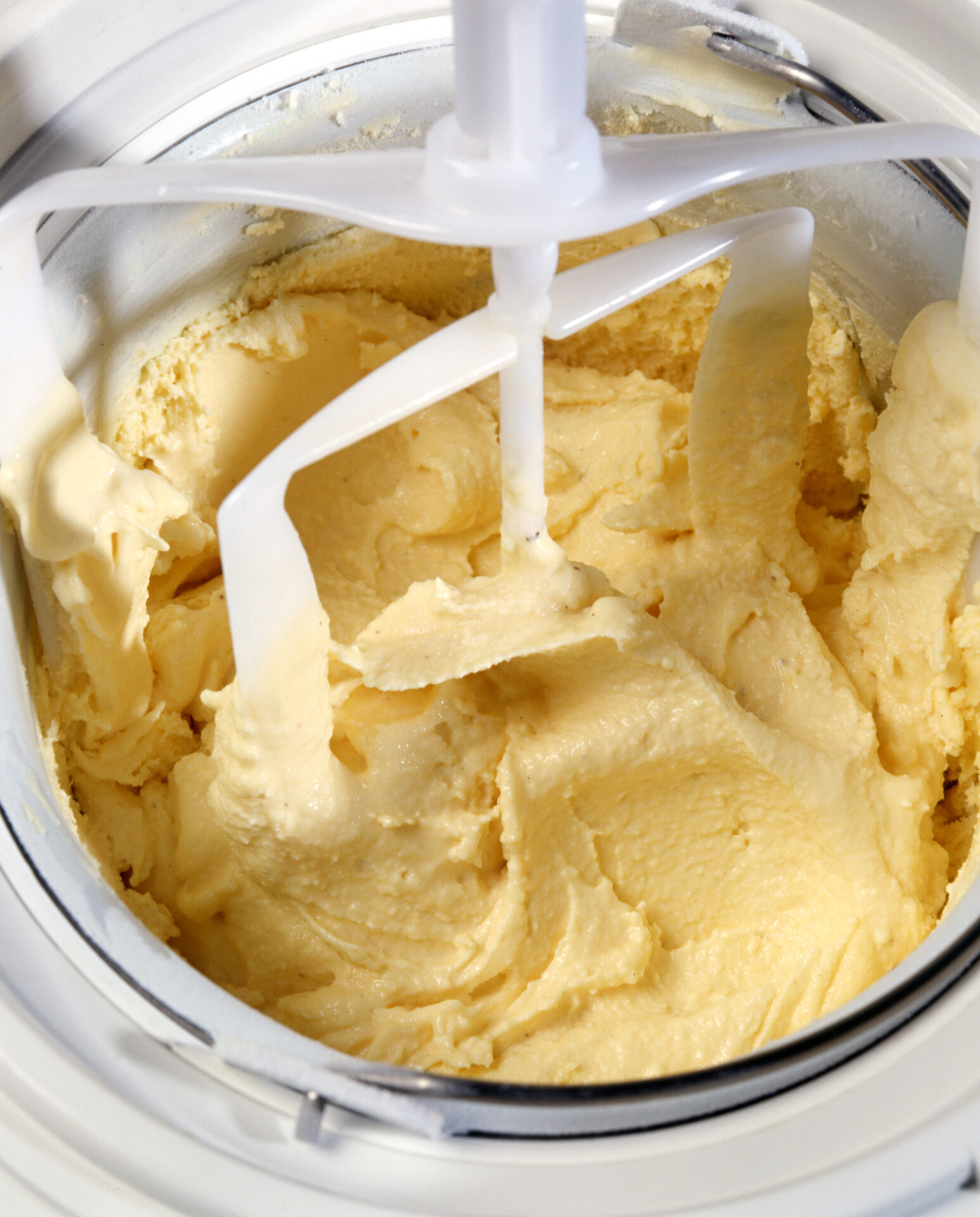
Unfortunately, the vast majority of ice cream makers contain at the very least plastic paddles and dashers. These are the plastic pieces that stir the ice cream in the bucket. In a perfect world, you would want to avoid plastic touching your ice cream. When Mamavation emailed brands for this investigation, we didn’t get transparent information from most companies about the type of plastic within their food contact materials. In fact, very few of them responded with specific details about their plastic materials other than to tell us they were made from “BPA-free” plastic.
The truth is any polymer (i.e. plastic) has the ability to leach mystery additives that can disrupt hormones over time. Furthermore, there are other chemicals in the bisphenol category other than Bisphenol-A (BPA), such as Bisphenol-S (BPS), that are just as problematic to hormonal health. We do not know if the “BPA-free” plastic is made from BPS or other bispenol. So for a company to say their plastic is “BPA-free” isn’t really telling us that much.
Types of Ice Cream Makers
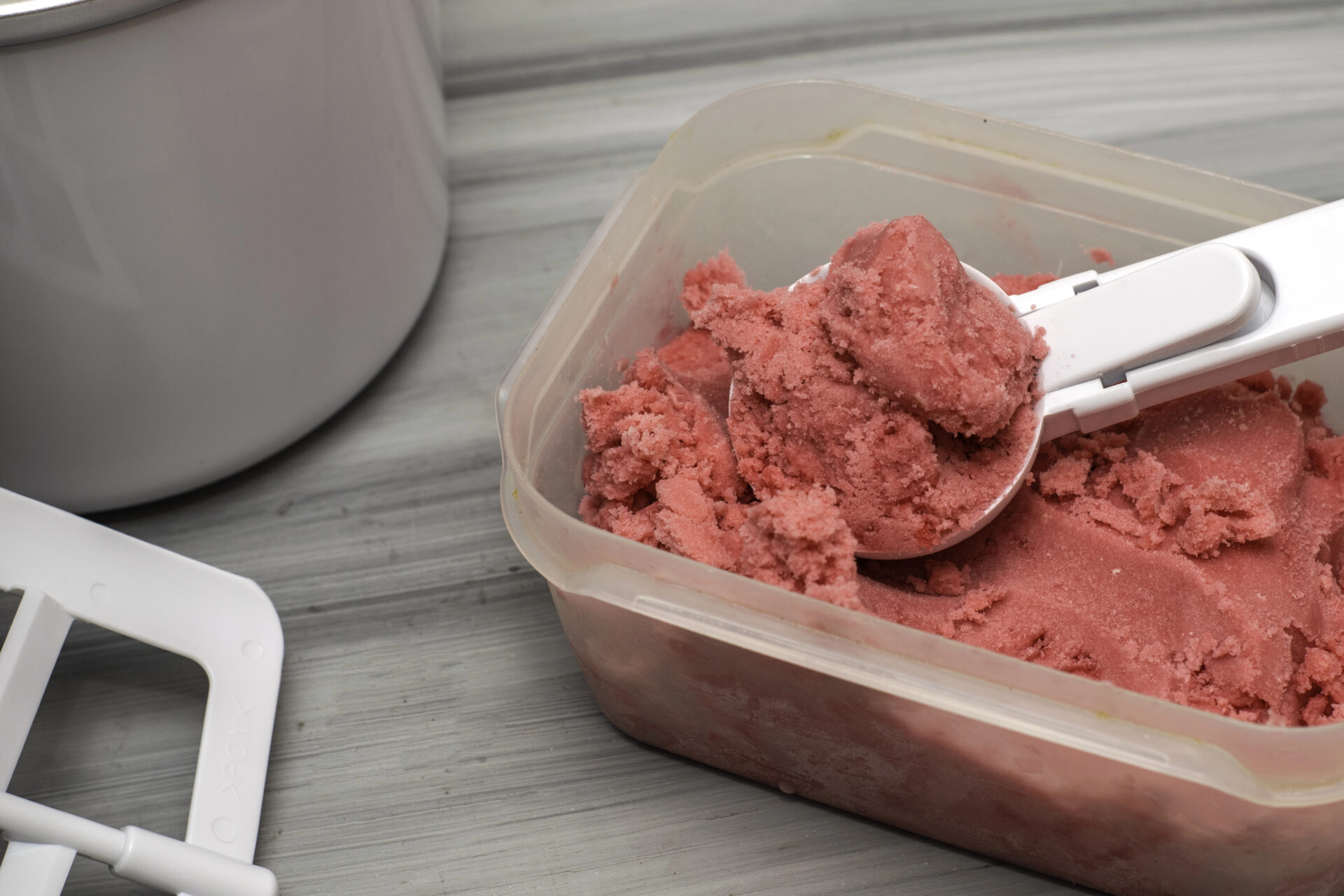
There are three basic types of conventional ice cream makers.
Compressor Machines — Compressor models are self-chilling. They can get down to below freezing temperatures without requiring the additional time of having to freeze the ice bowl beforehand. These ice cream makers are often more expensive.
Cannister Models — These ice cream makers come with a removable coolant-lined cannister that must be frozen before use. These ice cream makers need to be turned on and cooled down before use, so they take longer to use and are less expensive.
Manual Ice Cream Makers — These ice cream makers are the old-fashioned types that you must add salt to ice to lower the freezing point. We included one model of an old hand-cranked salt-and-ice cream maker that consists of all stainless steel. These models are not electric ice cream makers.
Rolled Ice Cream Makers–These ice cream makers are an adaptation from Thailand. Instead of making ice cream in a bucket, these machines provide you with an icy stainless steel platform to pour the ice cream base onto, watch it freeze quickly, roll it off the surface with a spatula and serve. Most of these machines used safe food contact surfaces made from stainless steel.
Parts of the Ice Cream Maker
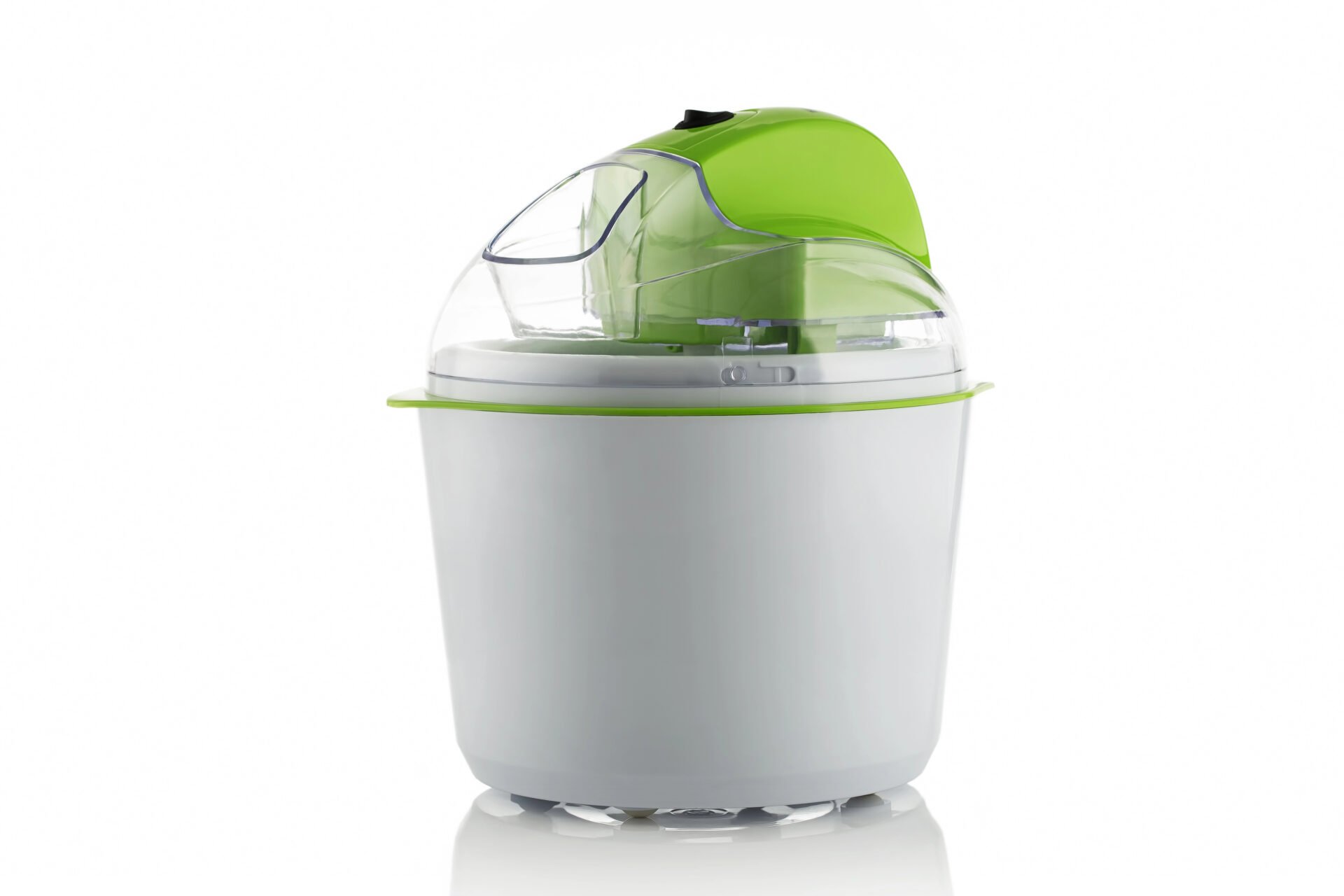
These are the main components and parts of a conventional ice cream maker.
- Paddle — This part is the attachment that churns the ice cream in the ice cream maker bowl. This part can also be referred to as a Dasher or mixing arm. The vast majority of the time this part is made from a type of plastic. Online reviews state that asymmetrical paddles are better at churning bases in an even swirling motion, incorporating more air, resulting in a softer texture for the ice cream.
- Lid — This part covers the ice cream maker when it’s in session to avoid splashing and mess. Most of the time this part is made from plastic and is transparent so you can monitor the progress of your ice cream.
- Bowl — This part is the bucket where all the ingredients go and are stirred until they become colder and firmer. Most of the bowls were either made from aluminum or stainless steel. Machines with stainless steel bowls will be safer and also heavier.
- Base — This part is where the motor is housed inside the unit. When you have a compression unit, this will be rather large. When you have a ice and rock salt model, the motor fits on top of the bucket and canister.
- Mixture — This is the base of your ice cream made mostly cream, milk, sugar, and flavorings.
- Mix-ins — These are additional flavors you add to your ice cream like cookies, nuts, brownies, or fruit.
Many Types of Ice Cream (Frozen Dessert Options)
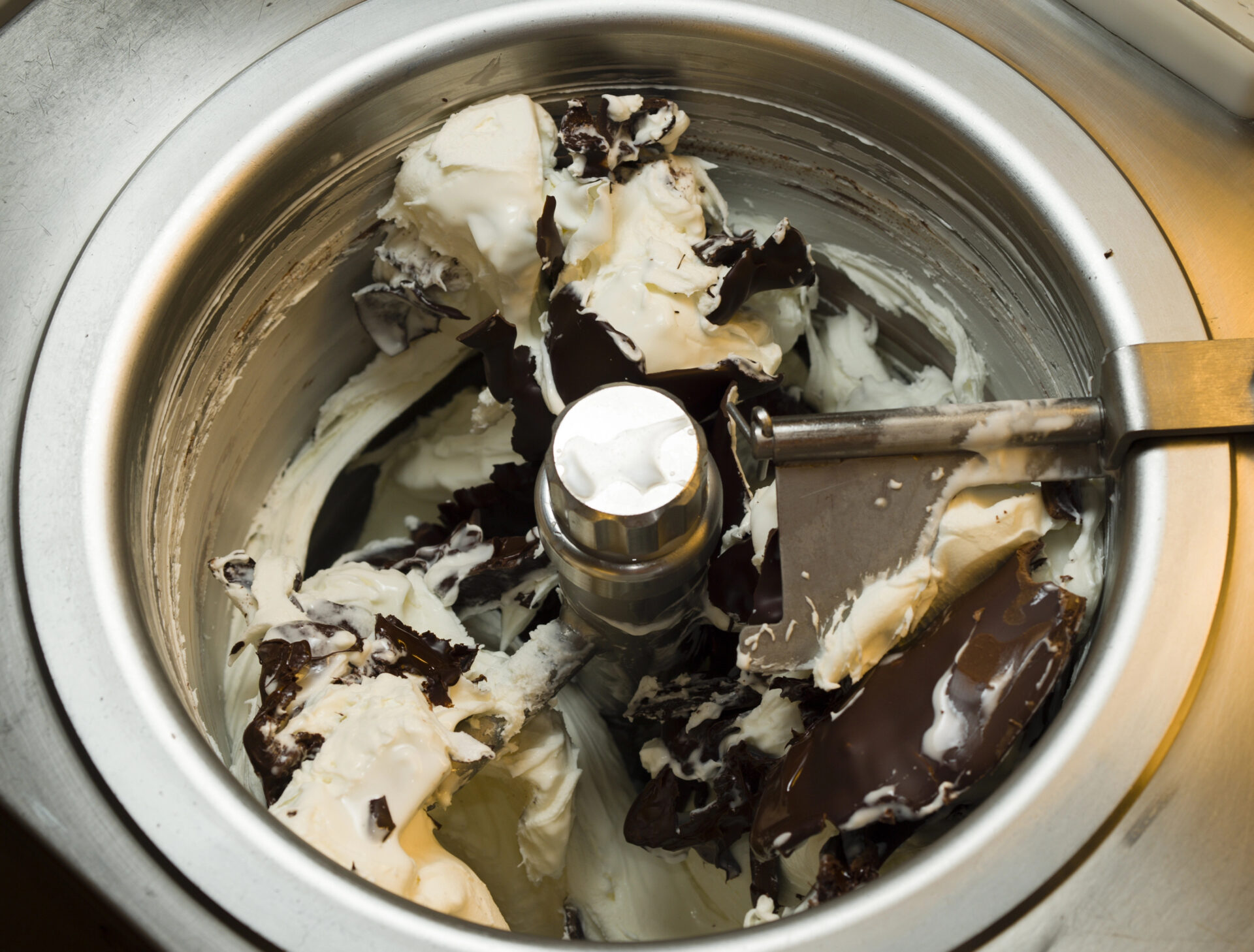
Ice cream isn’t just heavy cream, rock salt, and vanilla. There are many different types of ice cream from many different countries. Here are your main options to try at home:
- American-style ice cream: This ice cream is high in fat and made with milk and cream, whole eggs or yolks and flavors. It forms firmer and forms easily into scoops.
- Rolled Ice Cream: Originating from Thailand street markets, “ai time phad” debuted on the world stage in 2009. This ice cream is made fast on a very cold metal platform and then rolled by using metal spatulas. These types of machines are recommended in the “best” category because of their safer food contact materials.
- Gelato: This Italian-style ice cream is made with just milk and some cream, making it a lower-fat product. It’s also less dense than American ice cream and can be served at a higher temperature.
- Sorbet: This type of ice cream contains no dairy. Its texture comes from sugar, pectin, & starches from fruit purees.
- Sherbet: Similar to sorbet, sherbet can contain dairy but is also made with fruit and has a velvety texture.
- Frozen yogurt: This type of ice cream is made from yogurt and sometimes also contains milk or cream. Since it’s lower in fat, it has an icier texture and lower in calories and fat.
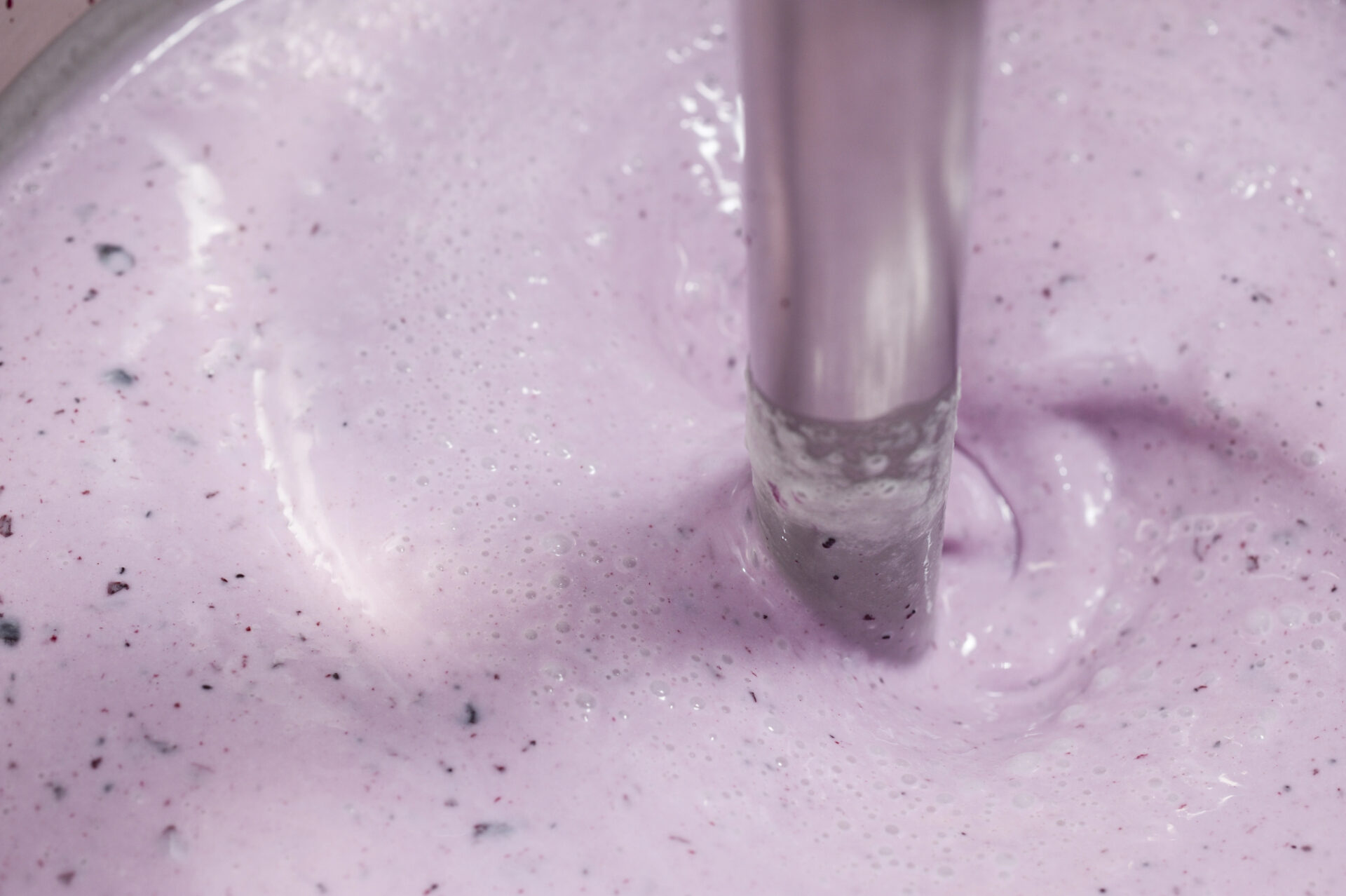
Mamavation’s Investigation of Ice Cream Makers
Not Our Favorite Ice Cream Makers
These ice cream makers disclosed food contact materials coated with PFAS “forever chemicals,” for their non-stick properties.
- Cuisinart Frozen Yogurt – Ice Cream & Sorbet Maker ICE-21P1
- Cuisinart Pure Indulgence 2-Quart Frozen Yogurt-Sorbet & Ice Cream Maker
- Cuisinart Ice-21 Cream and Gelato Maker
- Cuisinart Mix It In™ Soft Serve Ice Cream Maker by Cuisinart® ICE-48
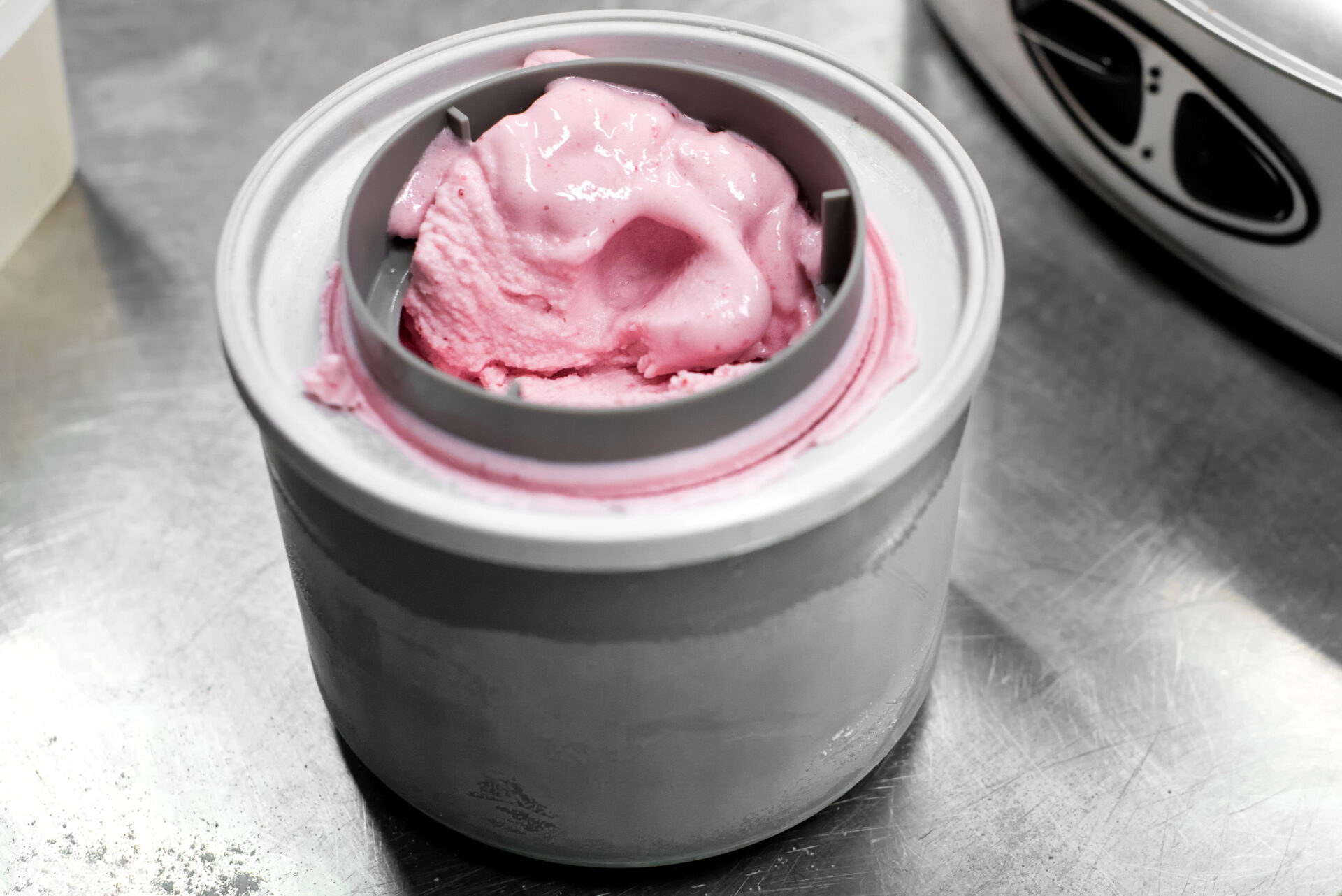
Better Ice Cream Makers
These ice cream makers did not disclose PFAS chemicals. However, they have other food contact surfaces made from either aluminum or plastic. Many of these machines have a stainless steel bowl, but still use a plastic stirrer piece. Because of the use of plastic, over time the heavy cream from the plastic will cause leaching.
- Breville the Smart Scoop Ice Cream Maker (Aluminum bowl)
- Dash My Pint Ice Cream Maker (Aluminum bowl)
- Dessert Station Black with 3 Pints, 11 Mode Frozen Treat Maker (mystery plastic bowl)
- Elite Gourmet 4Qt. Electric Motorized Old-Fashioned Bucket Ice Cream Maker (Aluminum bowl)
- Elite Gourmet 1.5Qt. Personal Ice Cream Maker with Freezer Bowl (Aluminum bowl)
- Hamilton Beach 4 Quart Ice Cream Maker MODEL: 68330N (Aluminum bowl)(Ice & Salt)
- Homtone Ice Cream Maker 2.64 Quart SKU: B0BN3D7ZKD (Stainless steel bowl)
- Homtone Ice Cream Maker, 2.1 Quart with Built-in Compressor and LCD Timer SKU: B0B21DV39N (Stainless steel bowl)
- Homtone Soft Serve Ice Cream Maker – SKU: B0BXWX1CRY (Stainless steel bowl)
- Kitchenaid Mixer Ice Cream Stand Attachment (Note fits most KitchenAid Tilt-Head Stand Mixers, except Artisan Mini models – KSM3316 and KSM3317. Fits most KitchenAid Bowl-Lift Stand Mixers, except the following 5, 5.5 and 6 Quart models: K5SS, KSM50, KSM500 and KSM450. >It is not compatible with Professional line Stand Mixer models: KSM90 and KG25H.)
- KUMIO 1.6-Quart Ice Cream Maker with stainless steel bowl (Stainless steel bowl)
- Ninja CREAMi Deluxe 7-in-1 Ice Cream Maker Ninja Model: NC301 (Stainless steel paddles but still has a plastic bowl)
- Nostalgia 2-Quart Electric Ice Cream Maker With Candy Crusher, Aqua/Stainless Steel (Aluminum bowl)
- Oliboni 2.6 Qt Ice Cream Maker with Compressor, (Stainless Steel bowl)
- TooA Milano Gelato Maker (Aluminum food contact)
- VEVOR Automatic Ice Cream Maker with Built-in Compressor, 2 Quart (Stainless steel bowl)
- Waring 2-Quart Ice Cream Maker WCIC20 (Aluminum bowl)
- Waring 2.5-Quart Ice Cream Maker WCIC25 (Aluminum bowl)
- Whynter ICM-201SB 2.1 Quart Capacity Upright Automatic Compressor Ice Cream Maker (Stainless Steel Bowl )
- Whynter ICM-128WS 1.28 Quart Compact Upright Automatic Ice Cream Maker (Stainless Steel Bowl)
- Whynter ICM-15LS 1.6 Quart Compact Automatic Compressor Ice Cream Maker (Aluminum bowl)
- Whynter ICM-220SSY 2 Quart Capacity Automatic Compressor Ice Cream Maker & Yogurt Incubator (Stainless Steel Bowl)
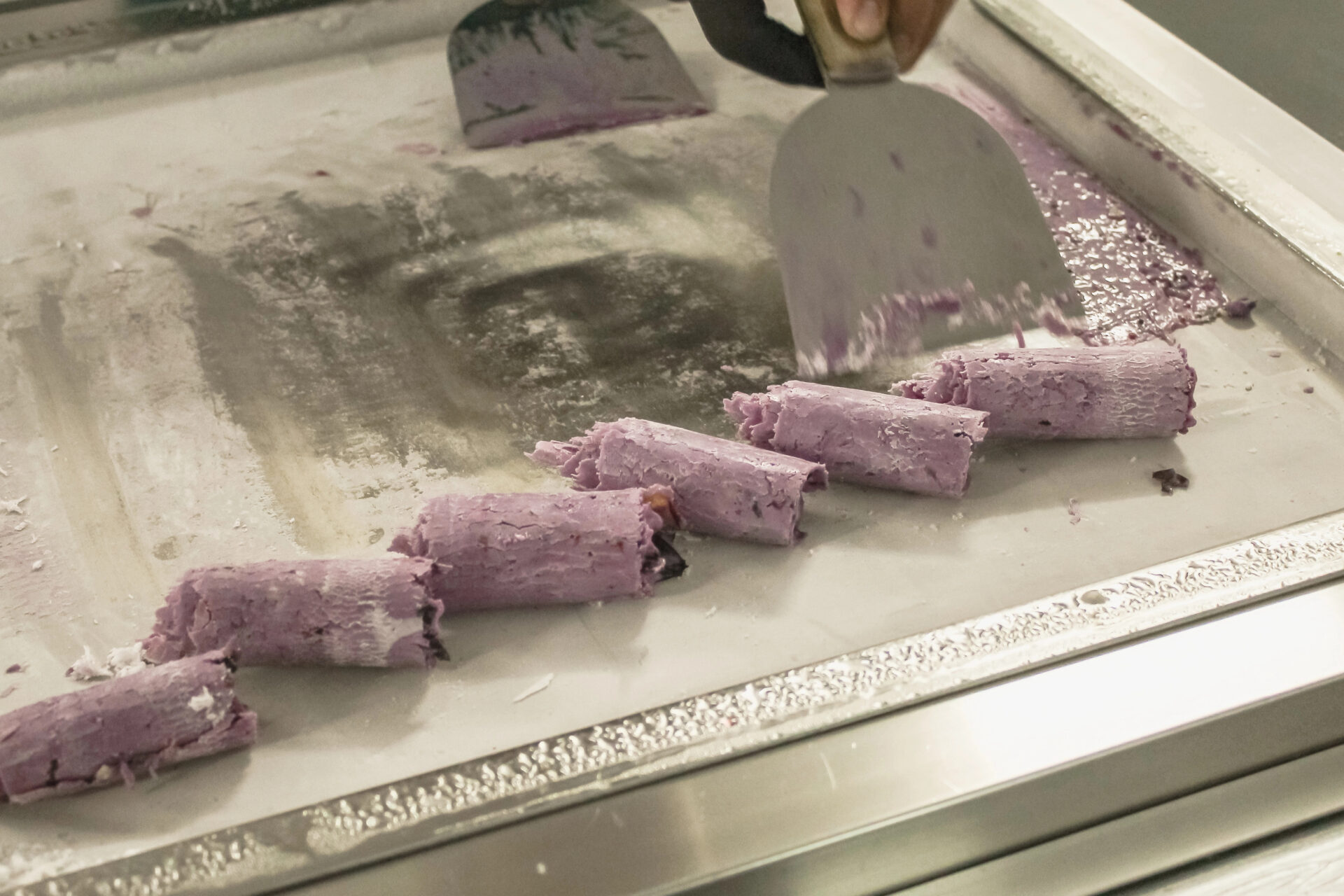
Best Ice Cream Makers
These ice cream makers do not have any food contact surfaces made from PFAS, plastic, or aluminum. This category is significantly more expensive than most products from the last category. Other options here are to look into the rolled ice cream category, which is less expensive and may be easier and faster to use.
- Immergood Stainless Steel Ice Cream Maker – Hand Crank PREMIUM 6 qt.
- Kolice Mini Countertop Batch Freezer, Italian Ice, Hard Ice Cream Making Machine. Continuous Freezer Gelato Machine.
- Lello Musso Pola 5030 Dessert Maker Silver, 2 Quart (all components made from stainless steel)
- Lello 4080 Musso Lussino 1.5-Quart Ice Cream Maker (All components made from stainless steel)
- VEVOR Fried Ice Cream Roll Machine, 12.6″ x 8.5″ Stir-Fried Ice Cream Pan, Stainless Steel Rolled Ice Cream Maker
- Whynter ICR-300SS 0.5-Quart Stainless Steel Rolled Ice Cream Maker With Compressor
 2 Year Global Study Deems Glyphosate Cancerous at “Safe” Levels