

The strawless movement to ban and restrict single-use plastic straws is gaining momentum. Cities, countries, and companies around the world are starting to look deeper into their plastic use and reconsidering the amount of plastic they are using. This is a good thing considering the United States has reversed its environmental policies of late and pulled out of the Paris Climate Accord. This is all happening amongst a backdrop of federal denial of climate change science at the Environmental Protection Agency (EPA), the stepping down of Scott Pruitt after numerous scandals and investigations, and an increase in deadly weather patterns around the world. Is the strawless movement a reaction to the fears we have of climate change and destroying the planet? Are we feeling helpless to stop what is happening and need something small to grab on to? I’m sure of it. And is this movement significant enough to change our planet? Some would argue no, but I would argue that small movements like this are not about the change itself and more about the beginnings of a mindset where we are more conscious of the planet and what we are doing to it. And that mindset is what we need to develop better renewable technology and increase the political will to protect the planet that we live on. You’ve trusted Mamavation to cover themes like eco-friendly alternatives to disposable plastic straws, what’s the air quality like in your city, and best and worst deodorants to purchase, now join with us as we explore the strawless movement and which cities and companies have combined forces to lessen our addiction to single-use plastics.
Disclosure: This post contains affiliate links.

Table of Contents
The Purpose Behind the Strawless Community
Let’s get one thing out of the way here first because there’s some confusion about the strawless community and their goals. The purpose of the strawless community is not to ban straws. Its ultimate goal is to decrease the amount of single-use plastics we use. And this is an important distinction if you want to understand how social movements start and come to a crescendo. This community is banking that by lessening the use of single-use plastic straws you will then start to think about other single-use plastic things in your life that you don’t need like plastic water bottles and plastic bags. Do these types of actions work? Yes, they do. A good example is the food movement. The food movement started with labeling GMOs as an education platform and ultimately got what they really wanted–an increase in organic food production. And to give you a visual of how this concept works and what happens, take a look at the video below.
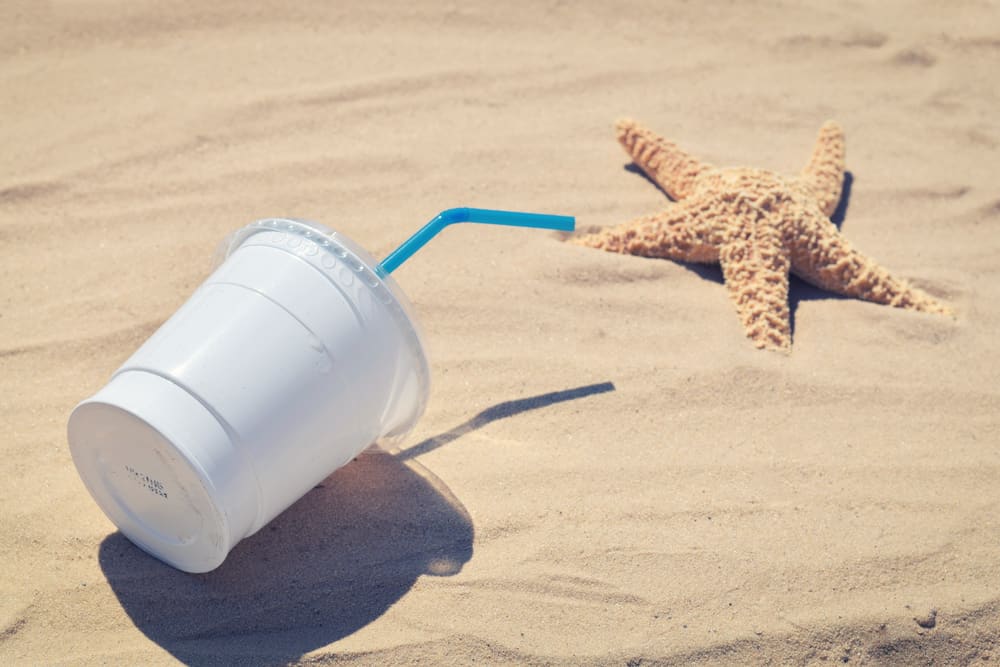
Why straws? Well, yes they are a lowest hangest fruit. Cutting out single-use straws is not going to solve our plastic problem. But that isn’t the point. They are something most of us can do without. And they also pose a threat to your hormones if they are ever heated or come into contact with fat or citric acid. Straws contain “indirect additives” inside the plastic that can leach out into your beverage and disrupt your hormones inside your body. They also contribute to the avalanche of plastic pollution inside our oceans, rivers, streams, and landfills. And they pose a threat to our food supply by contaminating the fish we eat with microplastics. In other words, single-use plastic straws are more harmful than useful.

History of Single-Use Plastic Straws
Straws are one of the most common eating utensils in developed countries worldwide. Primitive straws have been found in ancient Middle Eastern ruins, but the industrial revolution of the 1800s brought the straw to the forefront of the western world. During the industrial revolution, staws were made popular with the introduction of ryegrass straw, the industrially produced paper straw, and later the bendy straw, and the standard plastic straw in the 1960s. Currently, the United States population averages 1.6 straws per person per day which adds up to a whopping 500,000,000 disposable straws used every single year! It’s no wonder we’re heading into a massive ocean trash crisis since a large portion of our plastic garbage ends up with the fish.
Since realizing the enormous troubles facing our oceans, a grassroots movement began urging people and businesses to pay attention to the growing problem and calling on them to take simple steps to help solve it. It was actually a young boy who started the Be Straw Free movement back in 2011.
9-year-old Milo Cress said,
“Plastic straws are made of our dwindling oil resource, and simply by offering them instead of serving one with every drink automatically, we can reduce our consumption in half or more.”
Strawfree.org, TheLastPlasticStraw.org & LonelyWhale.org are three important groups who advocate for the reduction and/or elimination of single-use plastic straws among businesses and communities alike. They’ve used a simple but effective method to further the movement by contacting companies that use straws and asking them to adopt a policy of offering a straw first before automatically handing them out. It has been shown that 50-80% of people pass on the straw offer, so this new policy not only saves the business money, it also keeps millions of straws from ending up in the landfill and in the oceans.
Then in 2015 people started to realize what plastic straws can do to marine life after watching this viral video. It was filmed by Christine Figgener, a marine biologist at Texas A&M University. Today the viral video has over 31 MILLION views and over 68,000 comments mostly from people horrified by how a plastic straw could end up lodged up a turtles nose and restrict his breathing. As the marine biologists pulled the straw out, they at first didn’t realize what it was. They thought it may have been a parasite and then when they realized what it was, they got angry and said during the video how “useless” these straws really are. The turtle was obviously in pain as they were attempting to pull it out and hissed and struggled to get away. After a few minutes, the straw came out and the turtle was monitored for a bit before being released back into the ocean in perfect health.

Big Problems Caused By Little Straws and Plastic Trash
It doesn’t really seem like something as little as a straw could cause any problems big enough to affect us, but that’s not the case. In fact, there are quite a few looming troubles surrounding the ubiquitous little utensil. First of all, it’s the most common form of trash on the beach. In Santa Cruz and Monterey Counties alone, beach cleanups find 5,000 straws left on area beaches every year. That’s just two counties in the United States!
Straws are usually made from polypropylene which isn’t as toxic as some plastics and it’s BPA-free, but it does release small amounts of estrogenically-active chemicals that negatively affect the endocrine system. Here’s why that’s a problem. Number one, it never actually biodegrades. Over time (read: hundreds of years), it degrades into tiny pieces called microplastic but it never disappears and is always present in the environment, continuously leaching chemicals wherever it lies. Microplastic is also ingested by marine and land animals which causes them to become sick as they enter the human food chain. These microplastics are preferred over real food by fish as they are maturing and result in killing them before they have the ability to mature and reproduce. And even in mature adult fish that we eat, microplastics are finding their way there at high levels. That means, if you like to eat fish, you may want to pay attention to what plastic is doing to our oceans.
Other types of plastic waste contain a wide variety of other harmful chemicals that migrate out of the material, into our bodies and the environment. Bisphenols, which are a class of chemicals known as BPA or BPS, are well known for wreaking havoc on the body by disrupting hormones, triggering inflammatory bowel problems, obesity and irregular heart rates, and negatively affecting male sexual function.
Additionally, a full 8% of world oil production is used to manufacture plastics which creates pollution across the board from oil drilling to manufacturing, shipping, and final distribution. According to StrawFree.org, 80% of debris found in the ocean is land-based, and up to 90% of that is made from plastic.

Plastic Trash in the Ocean Harbors Harmful Bacteria
Plastic waste that ends up is the ocean has been found carrying stowaway bacteria across the Atlantic, which puts us all in danger when these plastics harbor disease-carrying pathogens. It takes about six weeks for a piece of plastic to go from the Atlantic coast in the United States to the North Atlantic. And in that time, plastic acts as an artificial microbial reef for certain types of bacteria that are able to interact with the material and use it to take refuge and colonize into thriving populations, even in cold water. A new study published in the Marine Environmental Research journal has found that microplastics can harbor a variety of bacteria in the genus Vibrio, which can cause severe diarrhea and inflammation when ingested by humans. And with the Great Pacific Garbage Patch being twice the size of Texas, we can only guess what’s currently breeding under the surface.

What About the Disabled & Special Needs Community?
Most of us don’t need straws, because we have the ability to drink from cups without a problem. But what if you couldn’t drink out of a cup? The disabled and special needs community is a community that needs access to single-use plastic straws because some of the alternatives are not as useful or pose a danger to them. It’s important to understand and accommodate these needs, and in doing so we should avoid an all-out ban of plastic straws and instead make them available for this community on demand. People with muscular disabilities or paralysis are dependent on plastic straws that flex and bend to help them drink. Paper and biodegradable straws are problematic because they’re not durable and are easy to bite through. Other options like silicone, glass and stainless steel straws are not flexible enough and may be a serious safety hazard. Folks with special needs frequently have to find ways to navigate a world not set up for them, and disposable straws help them do this.
Businesses That Have Embraced the Straw-Free Movement
We’re making great headway on the reduction of disposable straw use. In fact, The Last Plastic Straw has compiled a growing list of national eateries who’ve taken the straw-free pledge. The Surfrider Foundation of San Diego has gathered 100 area ocean-friendly restaurants who’ve agreed to recycle, eliminate the use of styrofoam and plastic bags, and provide disposable straws only upon request in all of their establishments.
Also notable are the following substantial businesses whose participation will have a huge impact in keeping straw waste out of our oceans.
- 1Hotels
- 21c Museum Hotels
- AccorHotels
- Akaryn Hotel Group
- Alaska Airlines
- American Airlines
- Anantara and AVANI Hotels & Resorts
- Carnival Cruises
- Edition Hotels
- Four Seasons
- Hyatt
- Hilton
- Hurtigruten
- IKEA
- Kimpton Hotels and Restaurants
- Marriott International
- Peregrine Adventures
- Royal Caribbean
- SeaWorld
- Smithsonian Institution
- Six Senses hotels, Resorts, & Spas
- SIXTY Hotels
- Taj Hotels, Resorts & Palaces
- The Doyle Collection
- Uniworld
- Virgin Voyages
- Walt Disney World’s Animal Kingdom

National Parks, Cities, and Countries That Have Restricted or Banned Plastic Straws
- Kingsmill Resort, Zion National Park
- Grand Canyon Railway, Grand Canyon South Rim
- The Grand Hotel, Grand Canyon National Park
- Painted Desert Oasis, Petrified Forest National Park
- Windstar Cruises, Yellowstone National Park
- Crater Lake National Park
- Rocky Mountain National Park
- Mount Rushmore National Memorial
- Furnace Creek Resort, Death Valley National Park
- Five Ohio State Park lodges
- Alameda, CA
- Berkeley, CA
- Carmel, CA
- Davis, CA
- Malibu, CA
- Manhattan Beach, CA
- Richmond, CA
- San Luis Obispo, CA
- Miami Beach, FL
- Fort Myers, FL
- Monmouth Beach, NJ
- Edmonds, WA
- Seattle, WA
- Vancouver, BC
- Belize
- Scotland
- Taiwan
- The Galapagos Islands
- The United Kingdom

Alternatives to Single-Use Plastic Straws
If you are wanting to use a straw but want to avoid single-use plastic straws, here are some alternatives we have curated for you that won’t impact your hormones.
Glass Straws
Silicone Straws
Stainless Steel Straws
- Rainier Tumbler Straws
- Eco at Heart Extra Wide Smoothie Straws
- Green Heart Angled Straws
- Joyeco Rainbow Straws
Paper Straws
- Striped Biodegradable Straws
- Green Paper Biodegradable Straws
- Bendy Paper Biodegradable Straws
- Natural White Biodegradable Straws
Bamboo Straws
Compostable Straws
And for more information about how you can lessen the impact that dangerous chemicals have on the hormones of your family, pick up a copy of Green Enough: Eat Better, Live Cleaner, Be Happier (All Without Driving Your Family Crazy!).
 How to Can Tomatoes to Avoid BPA–Canning 101 for Beginners