
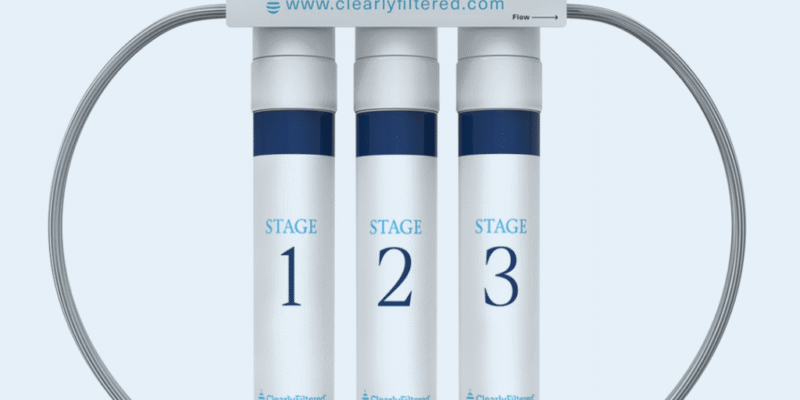
Does the Clearly Filtered water filter remove microplastics? Mamavation already cleared this filter for superior PFAS “forever chemical” removal, but what about microplastics? To answer this question, we partnered with The Water Map to test our kitchen sink and refrigerator water after installing the Clearly Filtered water filters. You’ve trusted Mamavation for investigations like (1) safest cooking oils with the least amount of toxic phthalates, (2) best grass-fed meat delivery box companies, (3) safest rice brands tested for heavy metals like arsenic, and (4) safest Vitamin D supplements tested for pesticides, PFAS “forever chemicals,” heavy metals, & phthalates; now join us as we bring you the results of Clearly Filtered filters.
Disclosure: This investigation includes affiliate links to Clearly Filtered and The Water Test. You do not pay anymore than normal when you shop our affilaite links, but it helps us fund our research and testing. You can also give a tax-deductible donation to our consumer studies here through Environmental Health Sciences. Thank you! Copyright © 2026 Mamavation — All Rights Reserved
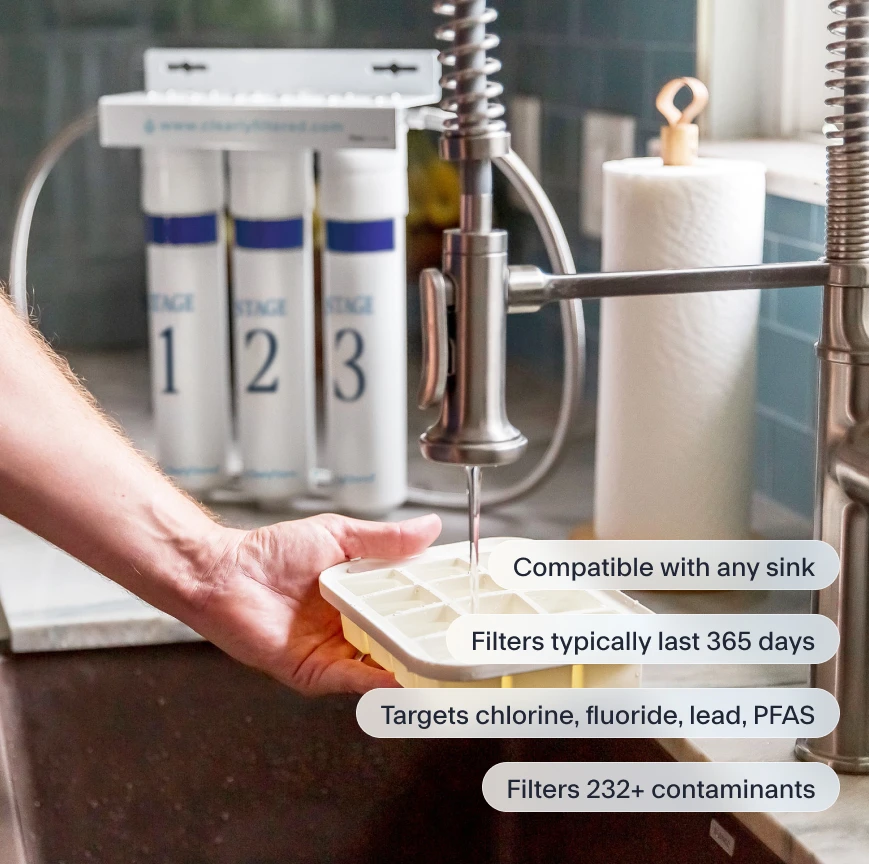
Table of Contents
Testing Shows Clearly Filtered Water Filters Lower Microplastics
Mamavation Partnered with The Water Map to test two Clearly Filtered water filters for the presence of microplastics: (1) the 3-Stage Under the Sink Water Filter System and (2) the Universal Inline Fridge Filter.
The Water Map conducted the testing inside their laboratory and included an additional hydrogen peroxide digestion step to ensure accuracy. In other words, it was done in a laboratory setting and was a bit different from the in-home test available on their website, The Water Test. The results were very promising for Clearly Filtered, especially their under-the-sink model.
- Unfiltered Kitchen Sink Faucet Testing — 14 microplastic pieces (microplastics before filter was installed)
- Clearly Filtered 3-Stage Under the Sink Water Filter System Testing — 1 microplastic piece (after filter was added under sink) (Use this link for an automatic 10% discount on your purchase!)
- Clearly Filtered Universal Inline Fridge Filter Testing — 3 microplastic pieces (after filter was added to refrigerator) (Use this link for an automatic 10% discount on your purchase!)
As you can see, when we installed the Clearly Filtered 3-Stage Under the Sink model, microplastics dropped from 14 particles to 1 particle. That was quite an impressive jump and was one of the lowest numbers reported to The Water Map for inclusion in their database. Their refrigerator filter had 3 microplastic particles reported, which is still good but not as good as their under-the-sink model. But again, I encourage you to see how common microplastics are in water and how low a score like 3 is nationwide on The Water Map. Combine that with Clearly Filtered’s ability to handle PFAS “forever chemicals” through independent testing, and we think these products are stellar for your kitchen to help you avoid PFAS & microplastics in your water.
We reached out to Clearly Filtered after our testing and asked for a special discount for our readers. For a limited time, Clearly Filtered is offering 10% off new filter systems when you purchase using this link!
Health Issues Linked with Microplastic & Nanoplastic Exposure
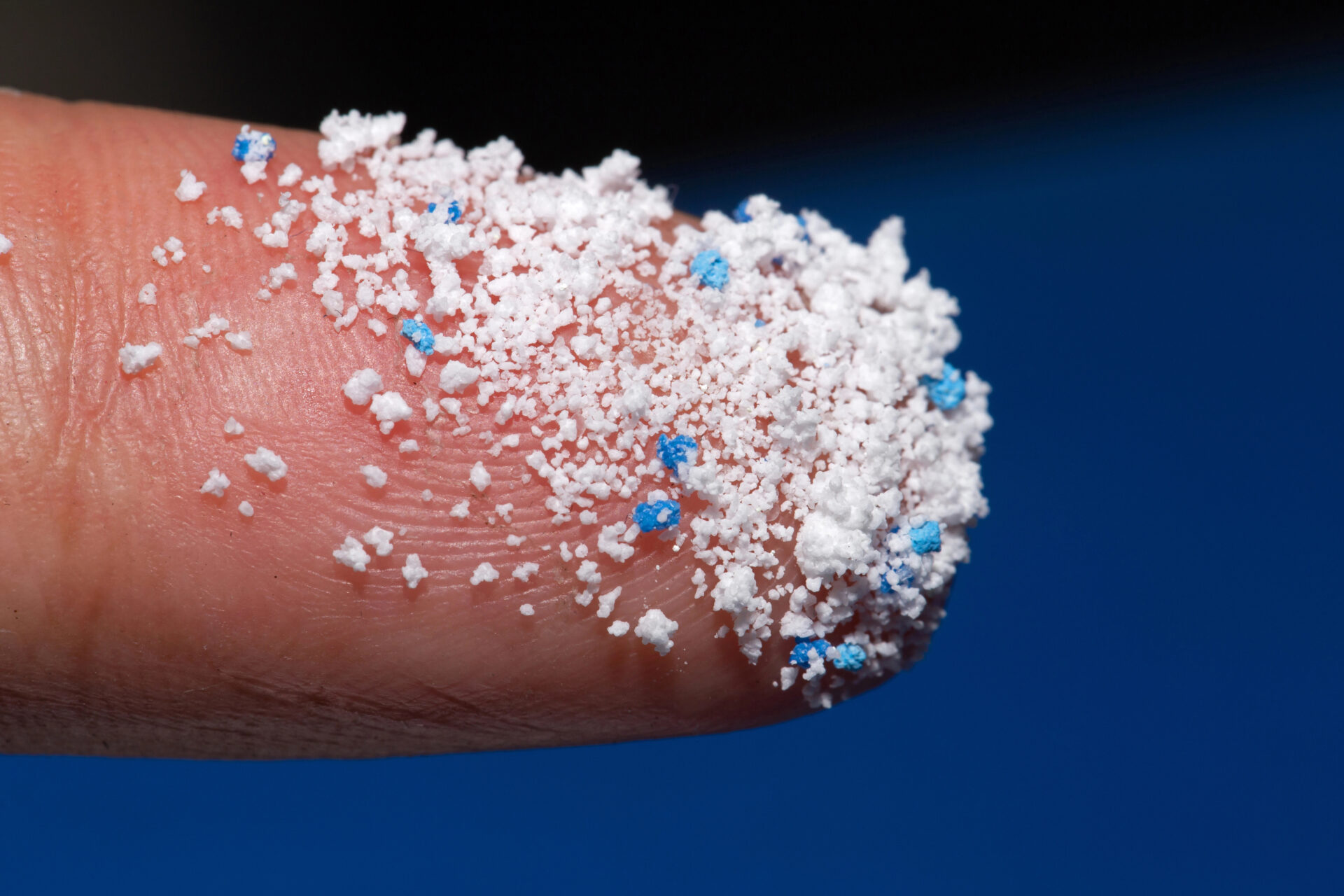
Microplastics and nanoplastics are tiny fragments of plastic that turn up in air, water, food, and the human body. People take them in mainly by eating, drinking, and breathing. The smallest particles can cross biological barriers and circulate within the human body. The most common polymers include polyethylene, PET, PVC, and polystyrene.
Microplastics have been linked to human health impacts:
- Cardiovascular disease
- Dementia
- Lower semen quality
- Lower chances of getting pregnant for women
- Disrupts digestive health
- Ashthma
- Toxicity in liver & kidneys
Microplastics and nanoplastics have also been found in the human body (blood, brain, liver & kidneys, lungs, placenta, testis & semen, heart & breast milk). Researchers are encouraging consumers to lower their exposure to microplastics and nanoplastics by cutting down on plastic in general around food & water.
Would You Like To Do Your Own Water Microplastic Testing?
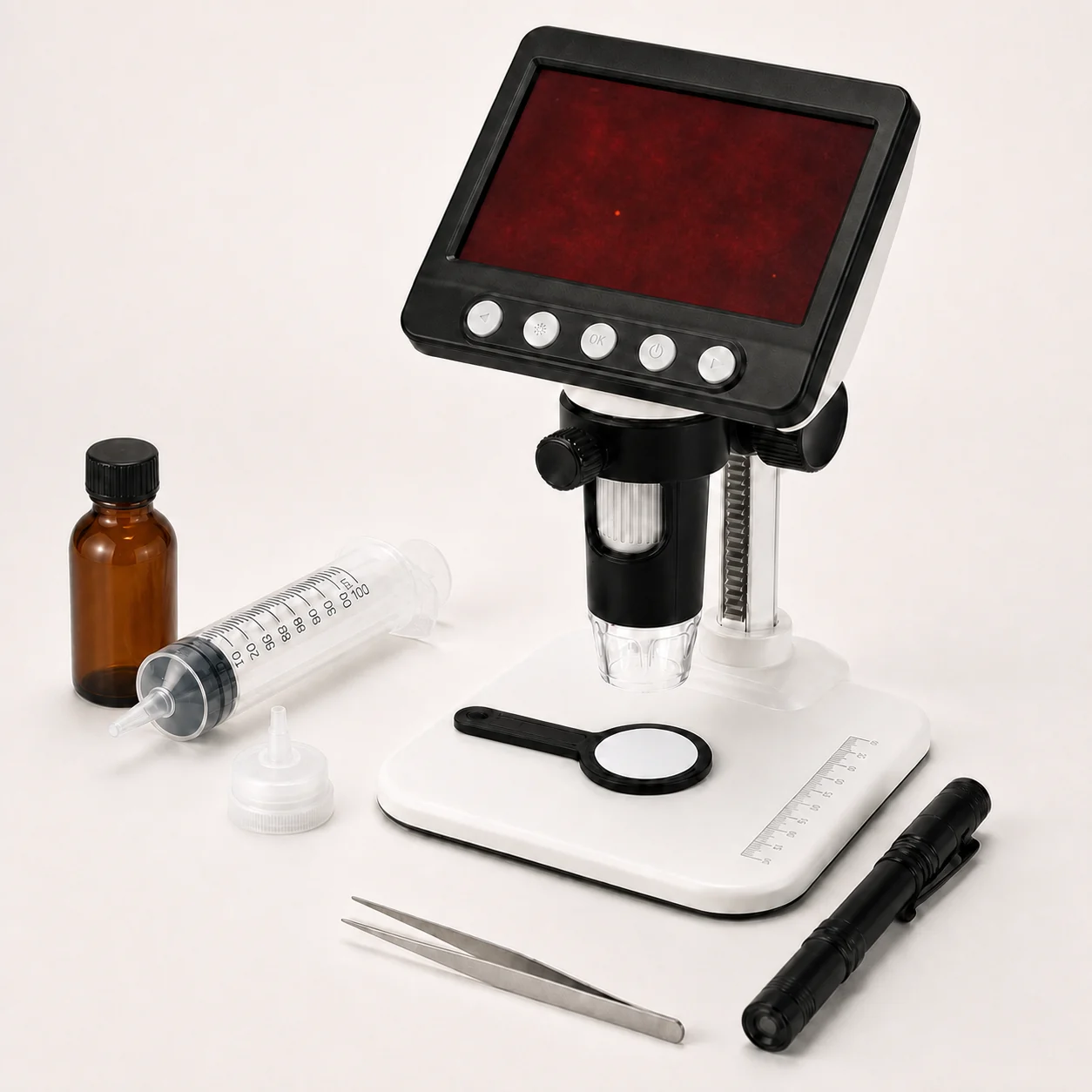
The Water Map, an organization that tracks water quality throughout the United States, has partnered with Mamavation to bring you a special deal on in-home microplastics tests. The Water Map has recently developed The Water Test, the world’s first in-home microplastics kit. If you would like to test your tap water, your filter, bottled water, or even your tea, pick up a testing kit.
How Does The Water Test Work?
The Water Test makes it easier to lower your microplastic exposure by testing at home. It’s three easy steps.
- Step One — Collect a water sample. You draw water into the syringe nad pass it through the filter membrane.
- Step Two — Stain the membrane. Apply the fluorescent stain included with each test.
- Step Three — See suspected microplastics. Inspect the membrane under the included digital microscope and blue light and count up how many microplastic particles you see.
Special Deal for Mamavation Readers
Mamavation readers get The Water Test Kit plus 5 complete tests for $100. That’s $35 off the normal $135 price.
You’ll get the following in your kit:
- Tabletop digital microscope
- Reusable syringe and membrane holder
- Viewing lense
- Blue flashlight
- Bottle
- Tweezers
- 5 staining vials
- 5 replacement membranes
Limitations of the Testing
The kit uses Nile Red fluorescence staining. Nile Red binds to hydrophobic (water-repelling) surfaces and fluoresces when it does. Common plastics — PE, PP, PS, PET, nylon — are hydrophobic, so they stain and glow. But the dye reports hydrophobicity, not polymer chemistry. The foundational paper for this method (Maes et al., 2017, Scientific Reports) describes it, in its own title, as a “rapid-screening approach.”
A glowing particle on your filter is a suspected microplastic: a hydrophobic particle in the microplastic size range that stained and glowed. In drinking water, that population is dominated by plastic. It is not chemically confirmed plastic. Confirmation requires micro-FTIR, Raman spectroscopy, or pyrolysis GC/MS — five-figure laboratory instruments.
Potential False Positives
Because Nile Red generally stains hydrophobicity, non-plastic hydrophobic material can fluoresce too. Documented offenders in the literature include lipids and fats, natural waxes, rubber fragments, some adhesives, and certain natural organic matter (biofilm, algal debris).
The standard laboratory control for this is a hydrogen peroxide digestion step, which oxidizes organic material into fragments that pass through the filter unstained. To test Clearly Filtered, our lab completed this step; however, the current kit does not include this step. Digestion-strength peroxide is regulated as a hazardous material for shipping, and they’ve chosen — for now — to ship a rapid, safe in-home screening test without it rather than ship hazmat to consumers. They are actively doing R&D on ways to lower the false-positive rate without a hazardous reagent.
The practical consequence: without a digestion step, organic-rich samples (tea, formula, pond water, water from old biofilm-lined plumbing) will read high, because non-plastic hydrophobic material that a digest would have removed stays on the filter and stains. Treat those counts as upper bounds, not measurements.
 Prenatal Vitamins Tested for Pesticides, Lead, Phthalates, & PFAS